How to Manage Billing for Your Business: A Complete Guide

Billing isn't just "sending invoices" — it's a cycle that runs from the first quote you give a customer through to the payment landing in your account and the report you hand your accountant at filing time. Here's how to think about managing that whole cycle, and where each piece fits.
The Billing Lifecycle, Start to Finish
Most small businesses build their billing habits one piece at a time — an invoice here, a payment note there — without a system tying it together. That works until volume grows, and then gaps start costing money: an estimate that never got converted, an invoice nobody followed up on, a payment that came in but was never recorded against the right bill. Managing billing well means treating it as one connected process, not a set of disconnected steps.
1. Quoting: Estimates Before Invoices
For many businesses — especially services, custom orders, or larger B2B sales — the cycle starts before a sale is confirmed. An estimate lets you send a customer a formal quote, negotiate if needed, and only convert it to a real invoice once they've agreed. Keeping estimates and invoices as separate document types (rather than sending draft invoices as makeshift quotes) means your invoice numbering and reports only reflect confirmed sales, not every quote you ever sent.
2. Invoicing: Getting the Bill Right the First Time
The invoice itself needs to be correct on the first try — GST fields, HSN codes, the right tax breakup — because errors here ripple into your reports and your customer's own filing. This is where fast, accurate line-item entry matters, whether that's a standard form or Excel mode for high-volume counters. If you're new to this step, the step-by-step invoice guide walks through it from scratch.
3. Payment Collection and Recording
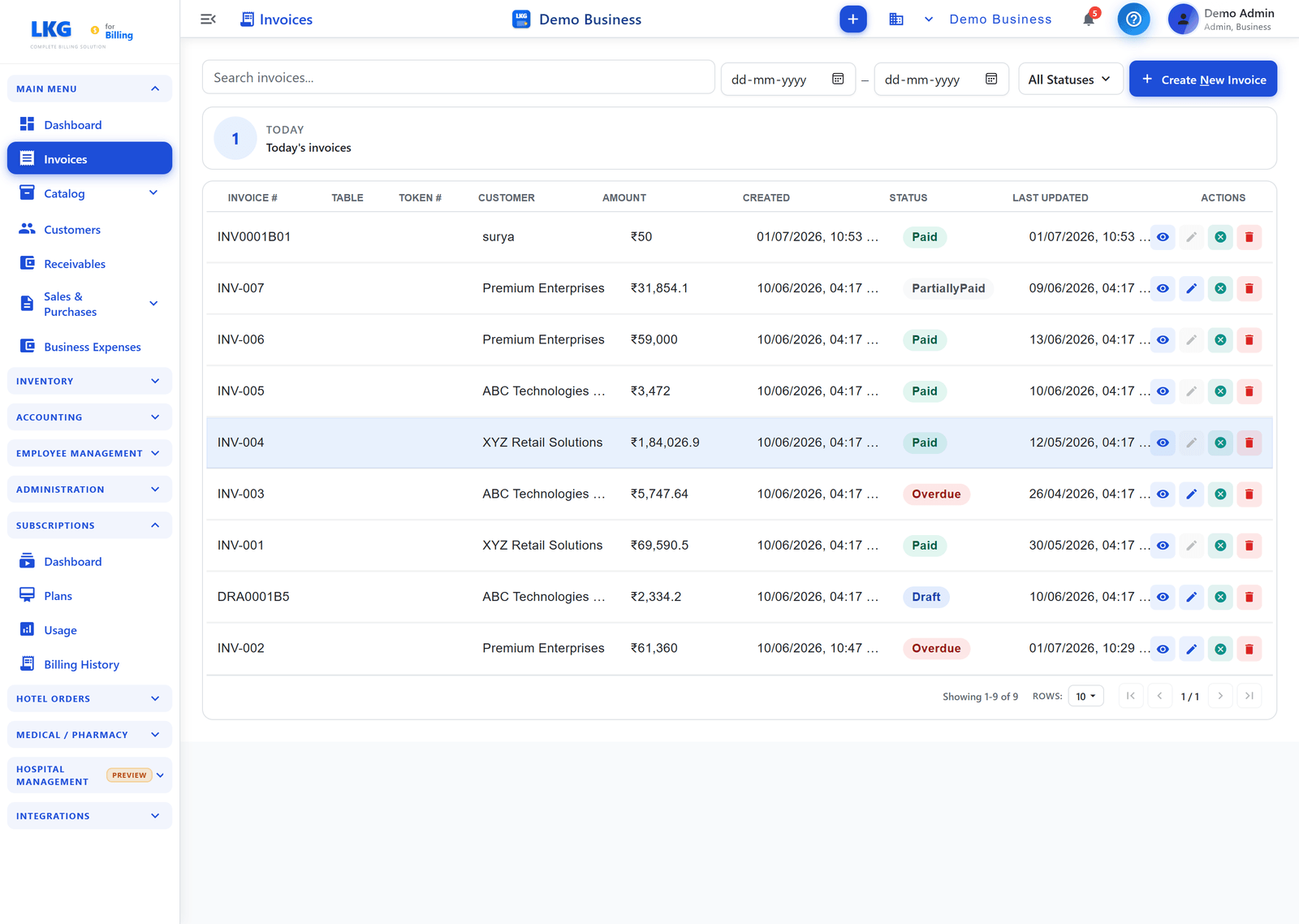
An invoice isn't the end of the transaction — it's the start of getting paid. Recording payments against the correct invoice, tracking partial payments, and knowing which invoices are still open is what turns billing into actual cash flow management rather than just paperwork.
4. Tracking Receivables
Receivables are the invoices you've sent but haven't been paid for yet. Without a clear view of what's outstanding, per customer, it's easy to lose track of who owes what — and to keep extending credit to a customer who's already behind. A good billing system surfaces this automatically instead of requiring you to cross-check invoices against bank statements by hand.
5. The Purchase Side: POs and Purchase Bills
Billing management isn't only about money coming in. If your business buys stock or supplies, purchase orders and purchase bills track what you owe vendors the same way invoices track what customers owe you. Keeping both sides in the same system means your stock levels, costs, and cash position all stay consistent, instead of living in separate spreadsheets that drift out of sync.
6. Reports and GST Filing Prep
Everything above feeds into reporting. At minimum, you want visibility into:
- P&L and cash flow, to know whether the business is actually profitable month to month
- GST report, summarizing taxable value and tax collected for filing
- Sales trends, to spot which products or services are actually driving revenue
- Billwise or partywise profit-loss, if you need margin visibility per sale or per customer
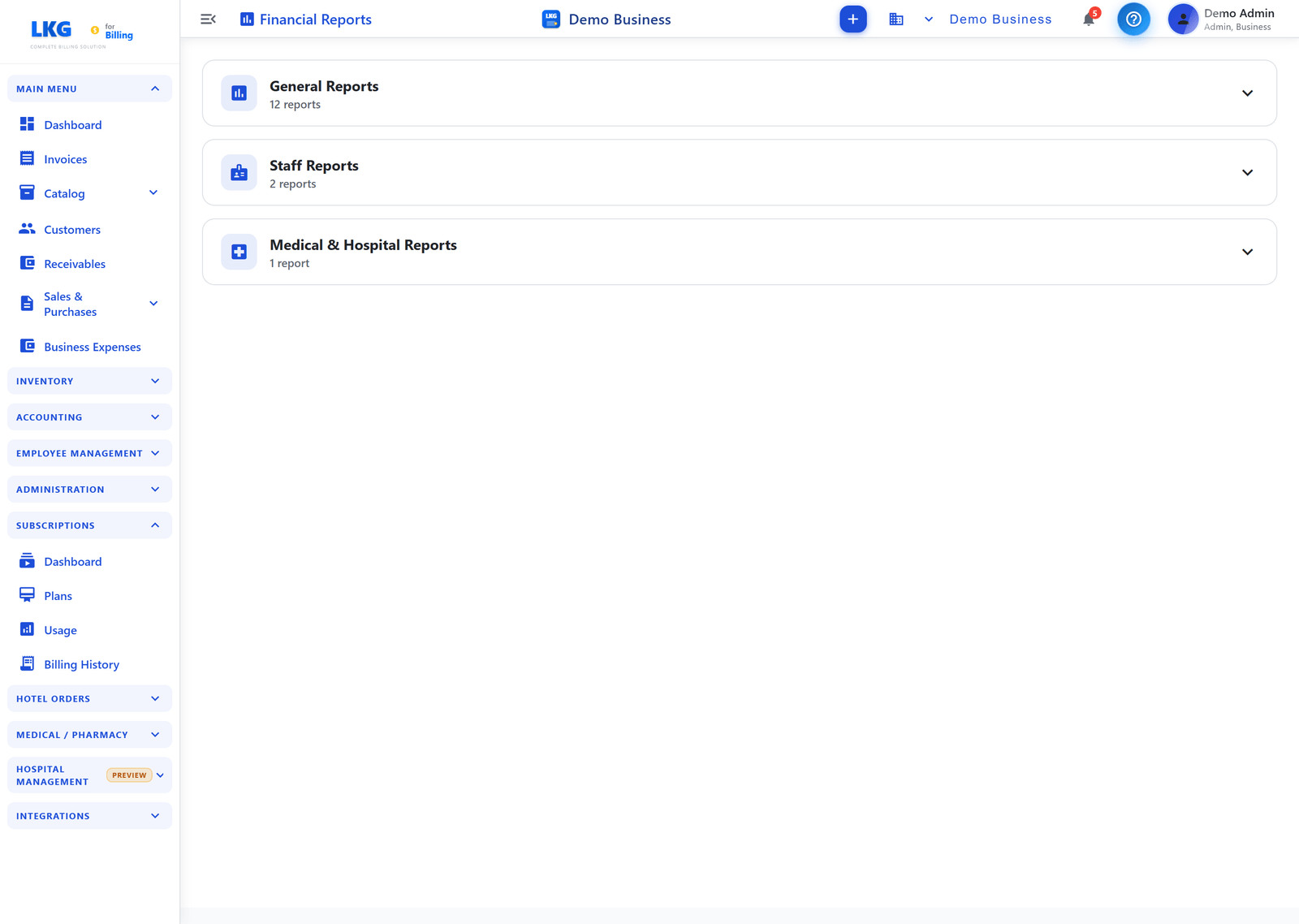
Doing this by reconstructing numbers from invoice PDFs at the end of each month is slow and error-prone. Reports that update as you bill remove that entire reconciliation step.
Choosing Billing Software That Fits Your Business Type
The right billing setup depends heavily on what kind of business you're running:
- Retail and kirana stores need fast counter billing and stock tracking — see billing for retail & kirana stores
- Wholesale and distribution businesses lean heavily on purchase orders and bulk billing — see billing for wholesale distribution
- Restaurants and hotels need table-wise orders and kitchen dashboards — see billing for restaurants & hotels
- Pharmacies, hospitals and clinics, salons and spas, electronics stores, garment stores, and transport businesses each have their own billing quirks worth reading up on before you settle on a workflow.
Bringing It Together with One System
The value of managing billing end to end isn't any single feature — it's that estimates, invoices, payments, receivables, purchases, and reports all reference the same underlying data. A payment you record shows up against the right invoice automatically. A GST report reflects exactly what was actually billed. You stop maintaining the same numbers in three different places.
Start Managing Billing Properly, for Free
You can set up this entire lifecycle — estimates through GST reports — on LKG for Billing's free offline plan (₹0, forever, no credit card, 10 invoices/month, 10 customers, 20 products) or a free 30-day cloud trial with the same limits. As your business grows past those limits, paid plans scale up without losing your existing data. Compare every tier on pricing, or download the app to start managing your billing properly today.
Related reading
- GST Billing Software: The Complete Guide for 2026
- How to Create a GST Invoice: Step by Step
- Free Billing Software: What You Actually Get for ₹0
- Invoices overview documentation
Bring your whole billing process into one place — download LKG for Billing and get started for free.